Brahmin marriage biodata format
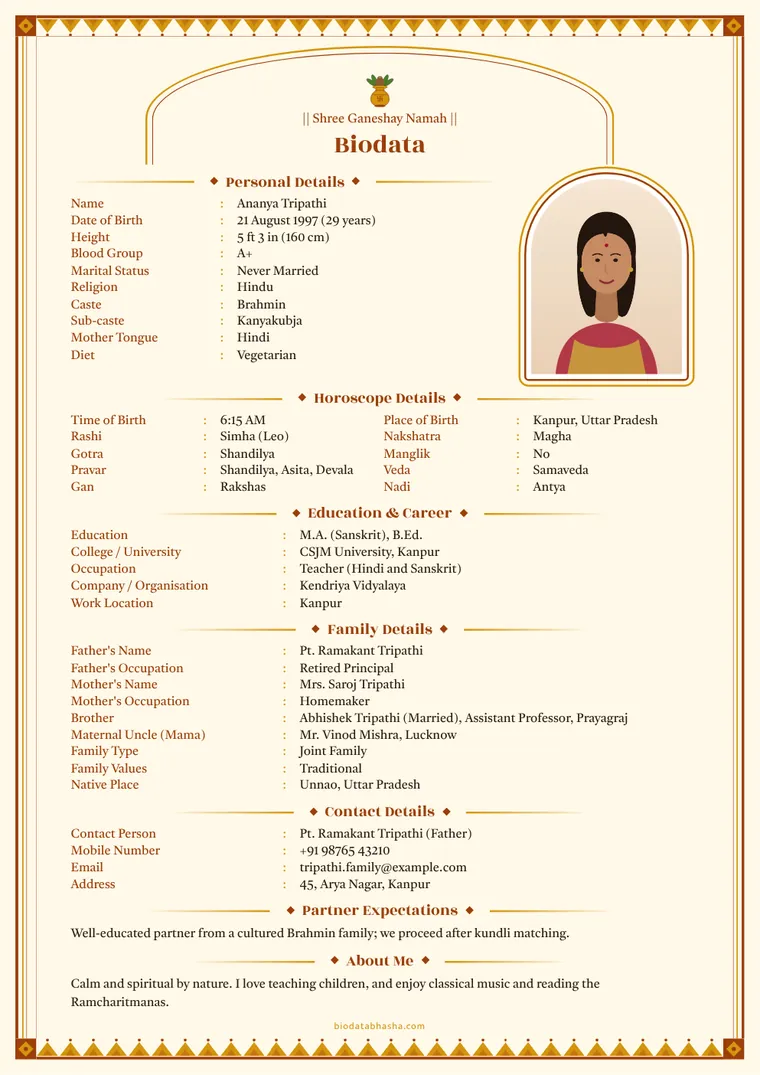
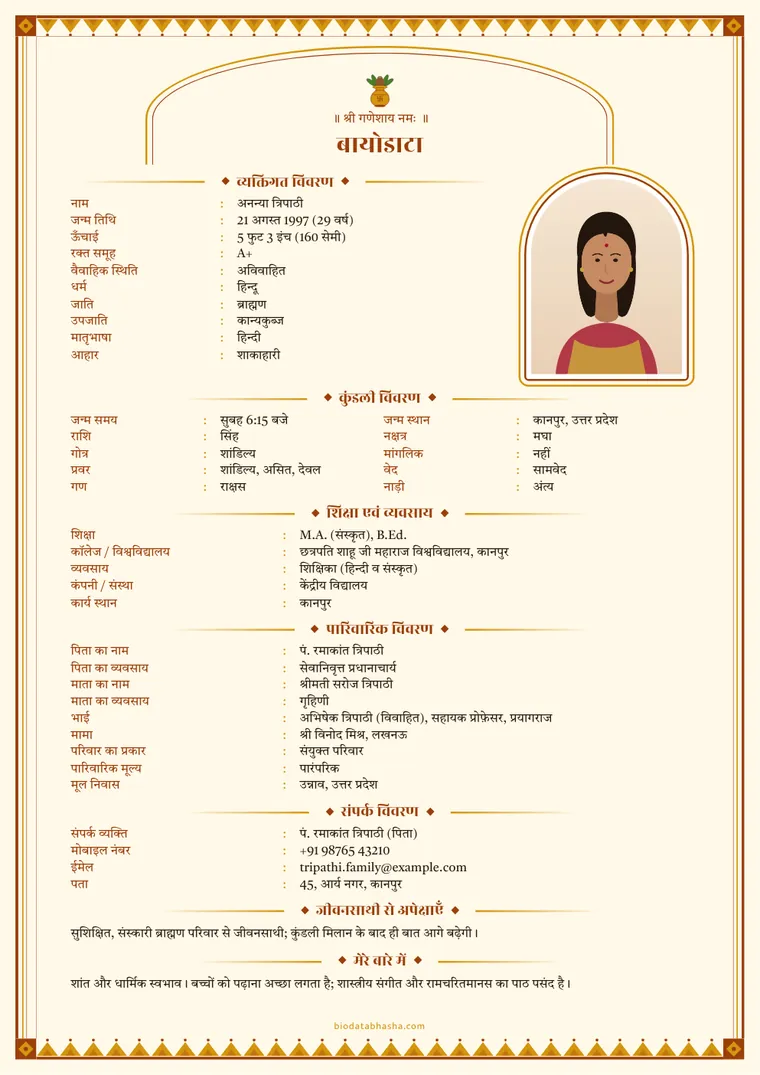
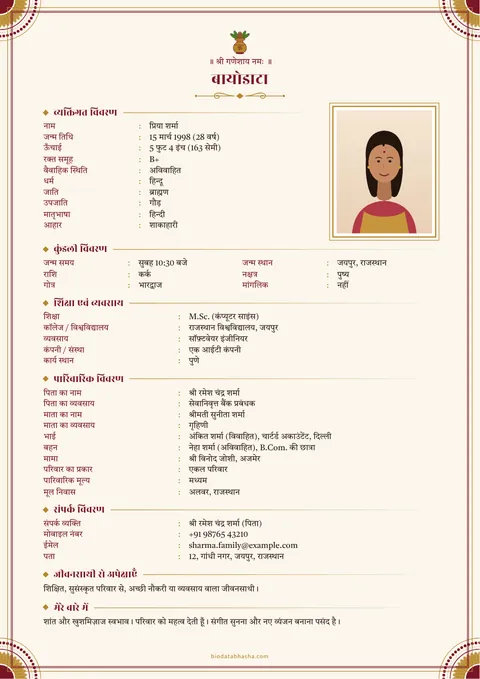
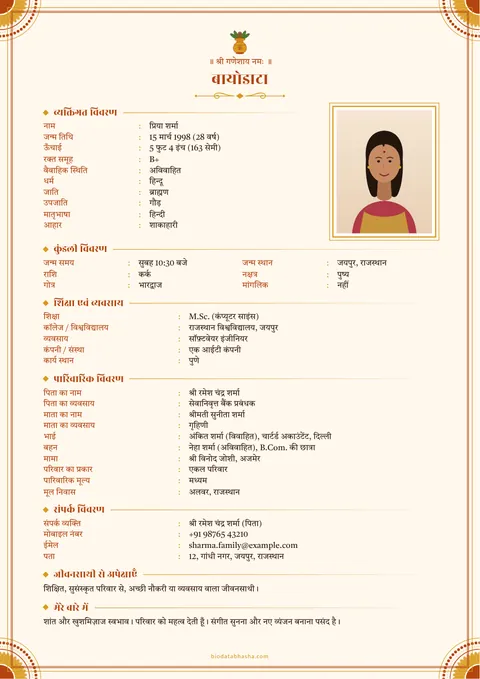
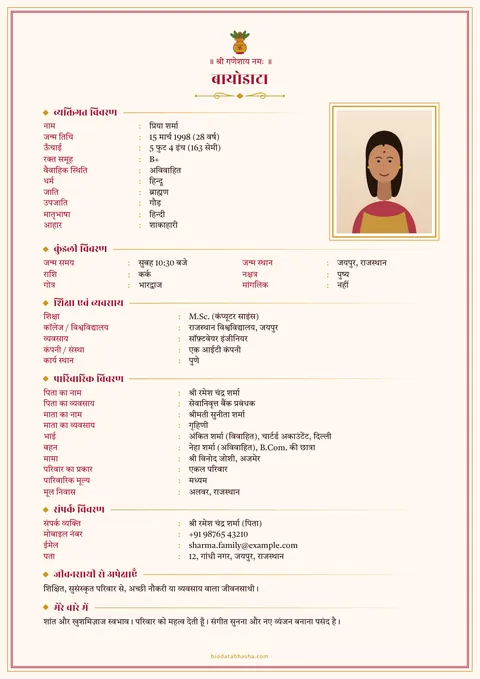
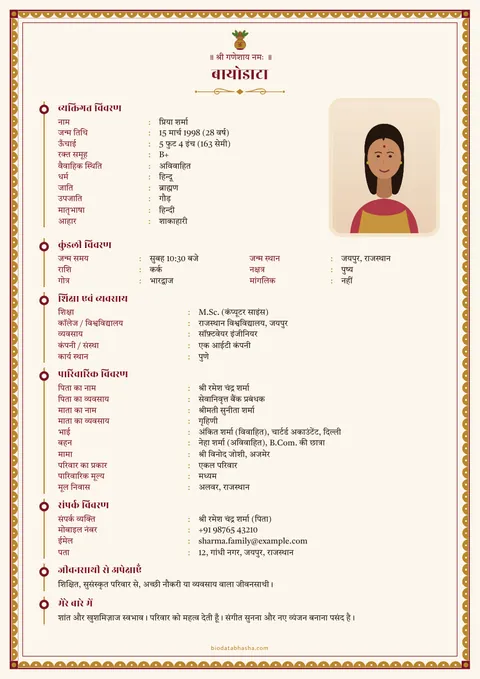
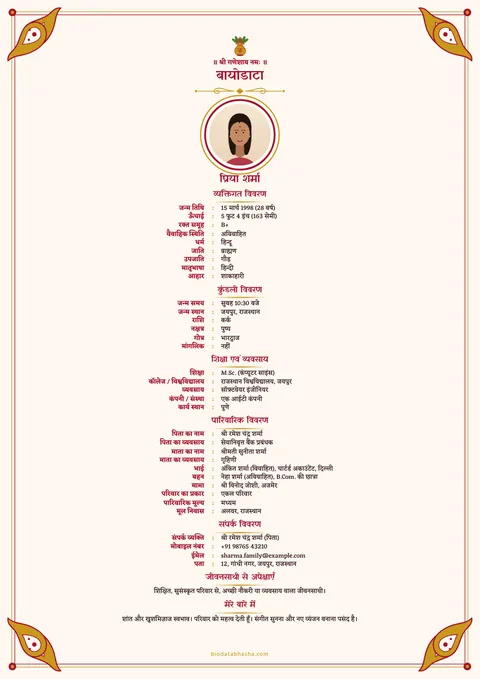
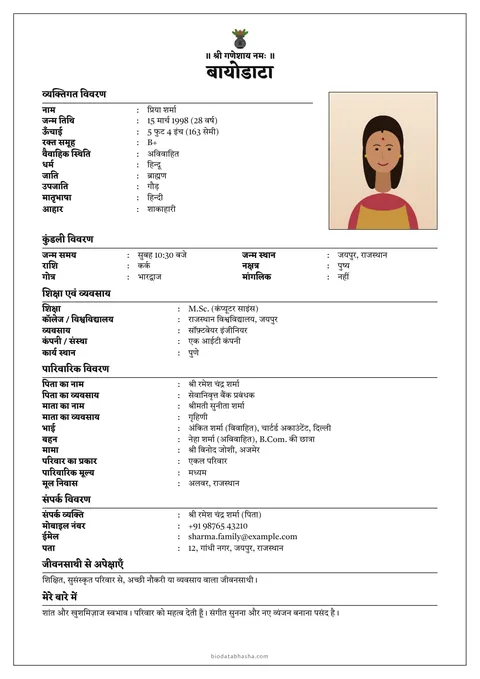
Brahmin families usually look at the horoscope and the gotra before anything else, so a Brahmin biodata gives fuller kundli details than most: gotra and often pravar, rashi, nakshatra, gan, nadi and manglik, with the exact time and place of birth. The sample below (made-up details) shows how BiodataBhasha lays this out.
Start with this Brahmin sampleReplace the made-up details with yours
What to include in a Brahmin biodata
- Sub-community: for example Kanyakubja, Saryupareen, Gaur, Maithil, Saraswat, Deshastha, Iyer or Iyengar — write it under sub-caste.
- Gotra, and pravar if your family knows it. Marriage within the same gotra (sagotra) is traditionally avoided, so families check this first.
- Kundli: exact time and place of birth, rashi, nakshatra and manglik, plus gan and nadi — the two kootas that carry the most points in guna milan. Add gan, nadi and veda with “Add your own field”.
- Education and work, then family: father’s name with “Pt.” or “Shri”, mother, brothers and sisters, mama and native place.
- Expectations: for example “from a cultured Brahmin family; kundli matching required”.
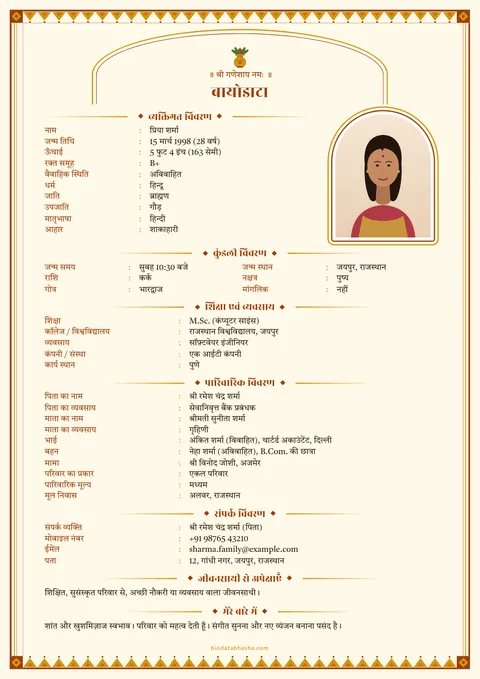
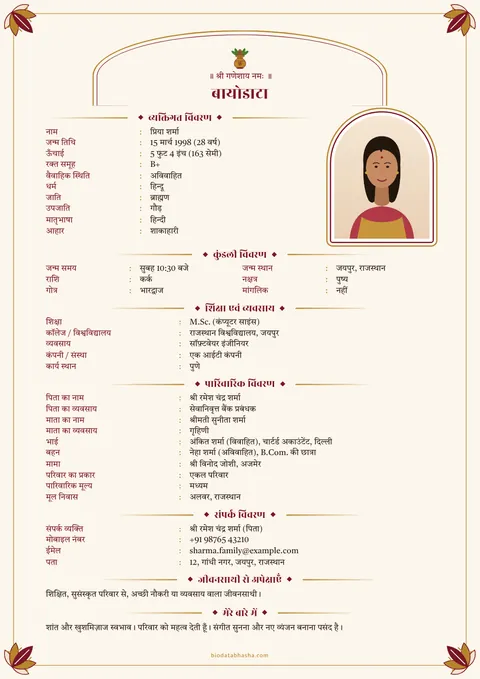
Brahmin biodata designs
Brahmin biodata: questions
Which kundli details should a Brahmin biodata have?
Time, date and place of birth, rashi, nakshatra, gotra and manglik are the usual minimum. Many families also write gan and nadi, because the gan and nadi kootas carry the most points in the 36-guna milan. If you are unsure of a value, leave it out rather than guess — the other family’s pandit can work it out from the birth details.
What is pravar, and should I write it?
Pravar is the list of rishis linked to a gotra (for Shandilya gotra, for example: Shandilya, Asita, Devala). Some families like to see it next to the gotra. Add it with “Add your own field” in the horoscope section if your family uses it.
How do I find gan and nadi?
Both follow from the birth nakshatra and are written in your janam kundli; your family pandit can tell you. The kundli details guide explains each term.
Can I write the biodata in Sanskrit?
Yes. BiodataBhasha has Sanskrit (जीवनवृत्तम्) along with Hindi, Marathi, Tamil, Telugu, Kannada and every other Indian language. Choose it in Design.
Biodata formats for other communities
By religion: Hindu biodata · Muslim biodata · Sikh biodata · Jain biodata · Christian biodata · Buddhist biodata
By community: Maratha biodata · Rajput biodata · Agarwal biodata · Kayastha biodata · Jat biodata
Every format works in all 23 languages; caste and community lines are optional and never required.