Rajput marriage biodata format
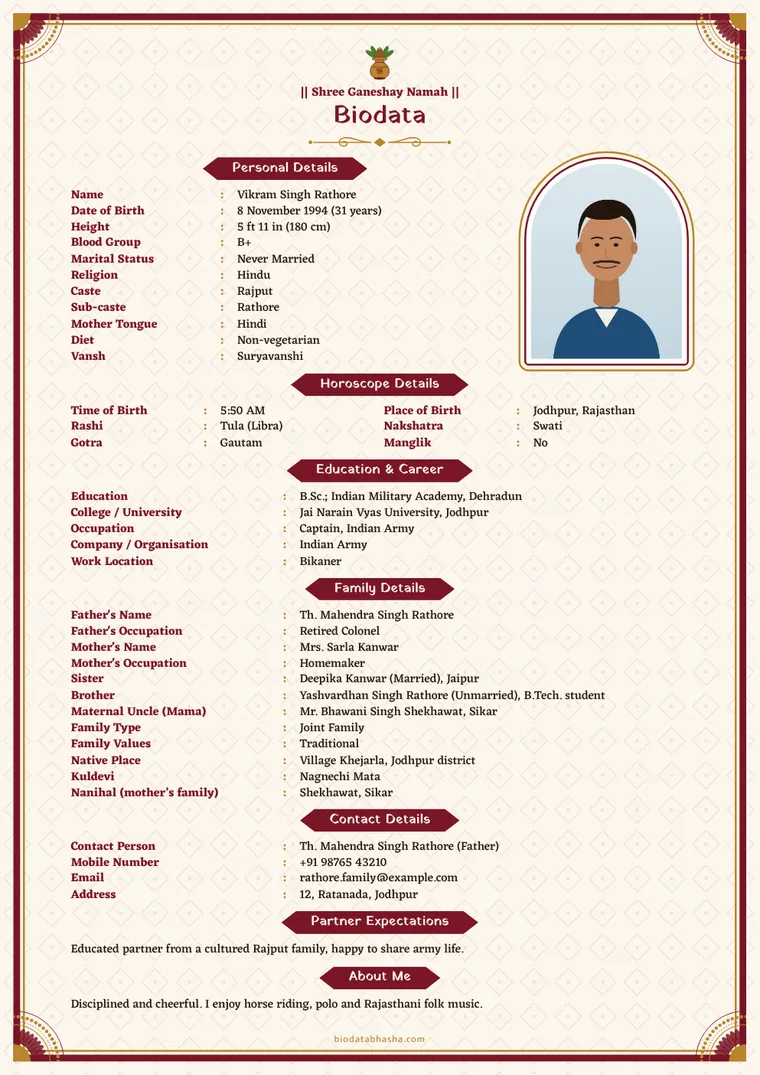
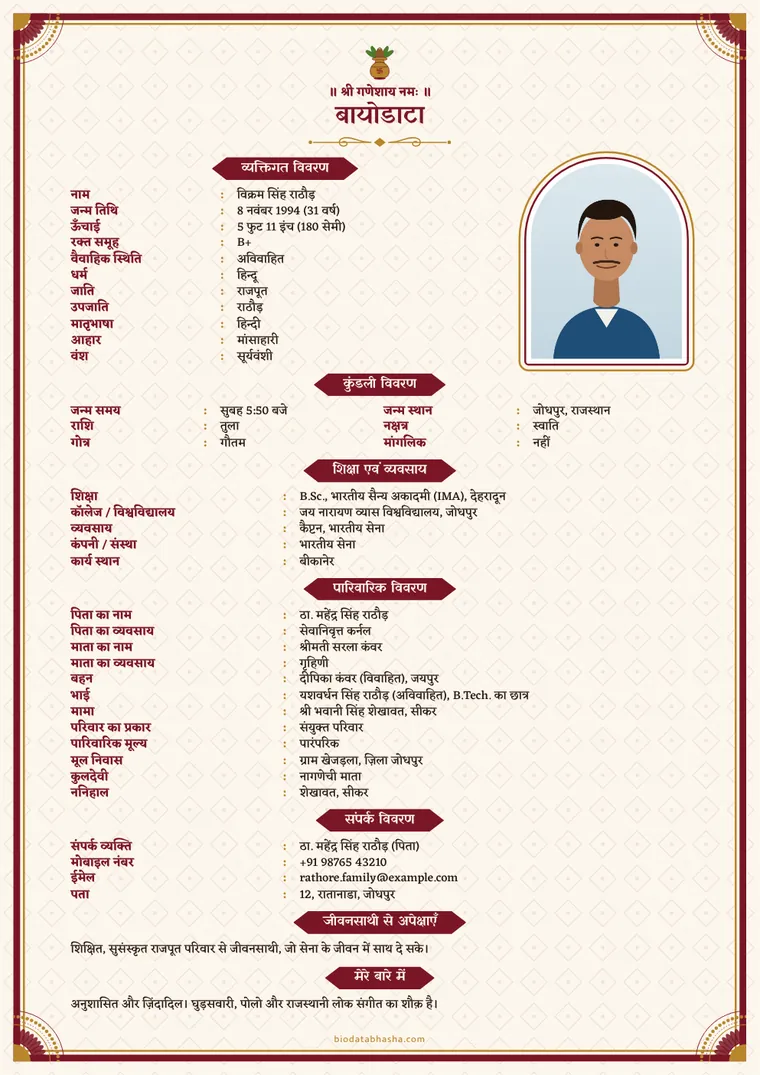
A Rajput biodata usually names the clan (for example Rathore, Chauhan, Shekhawat or Sisodia), the vansh, gotra and kuldevi, and the mother’s family (nanihal), because families avoid a match within the same clan and look at both sides. The sample below (made-up details) uses a royal Rajasthani design.
Start with this Rajput sampleReplace the made-up details with yours
What to include in a Rajput biodata
- Clan: write it under sub-caste (for example “Rathore” or “Chauhan”), with the khaanp if your family uses one.
- Vansh (Suryavanshi, Chandravanshi or Agnivanshi), gotra and kuldevi — add vansh and kuldevi with “Add your own field”.
- Nanihal: the mother’s clan and place, since many families check that the clans differ on both sides.
- Father’s name with the family’s title (Thakur / Th., Rao, Rawat) if you use one, and the native village or thikana.
- Work: for army, police or government service, add the rank and the posting.
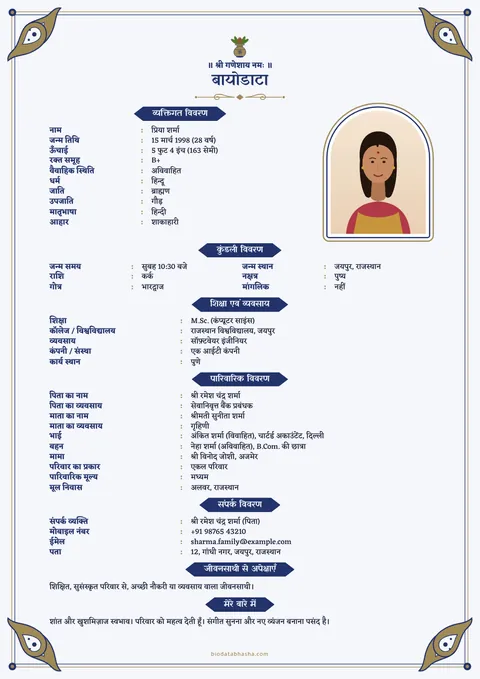
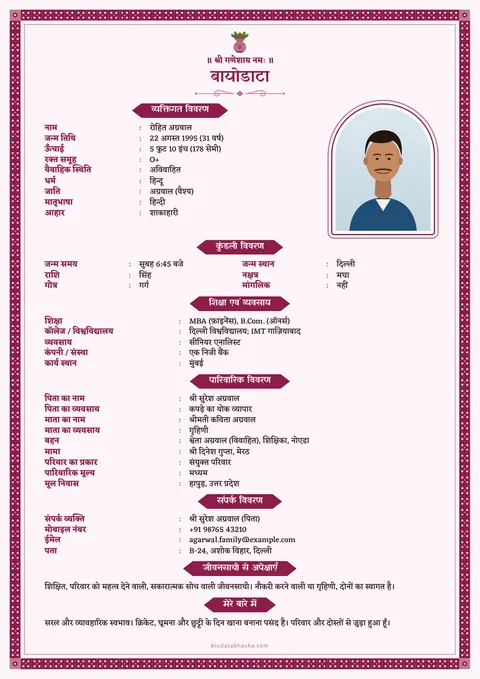
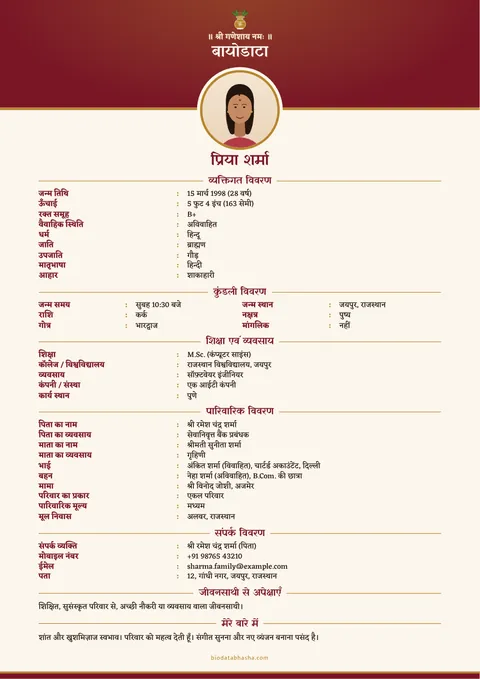
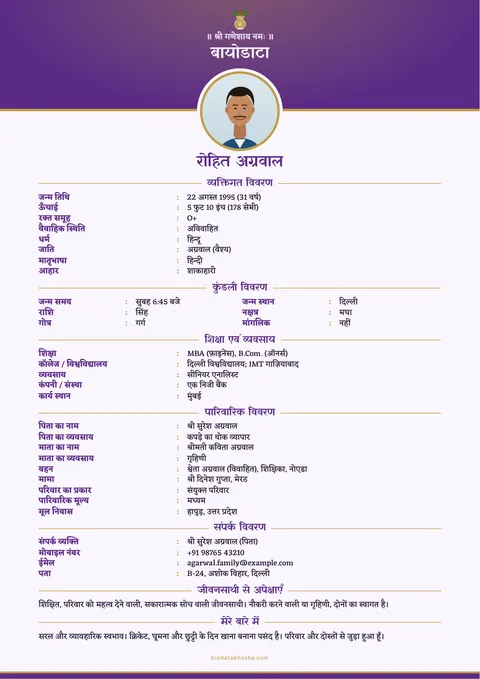
Rajput biodata designs
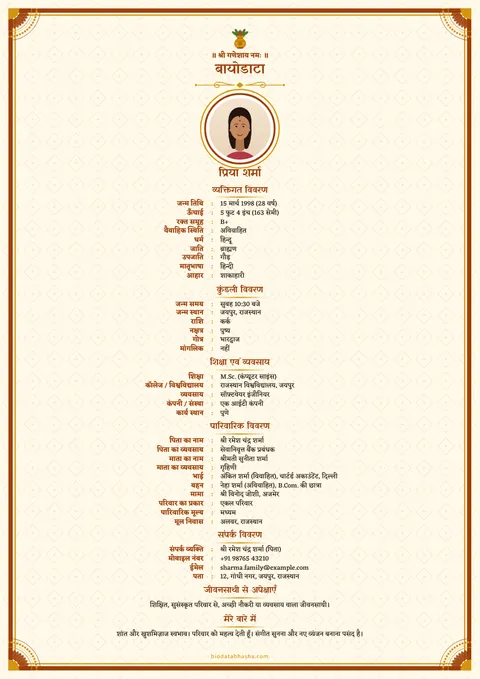
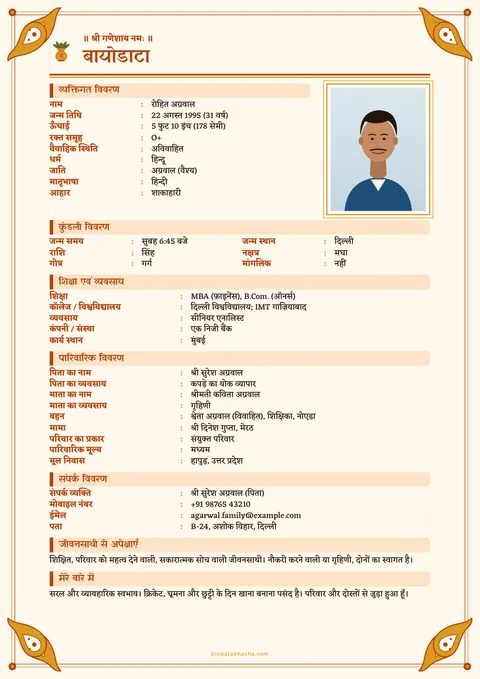
Rajput biodata: questions
What should I write for vansh and kuldevi?
Write what your family follows, for example “Suryavanshi” and “Nagnechi Mata”. If you are unsure, ask the elders — these lines matter to many families, so it is better to leave them out than to guess.
Why is nanihal mentioned?
Many Rajput families check that the bride’s and groom’s clans differ, and some also look at the mother’s clan. Writing the nanihal (for example “Shekhawat, Sikar”) answers that question before it is asked.
Which designs suit a Rajput biodata?
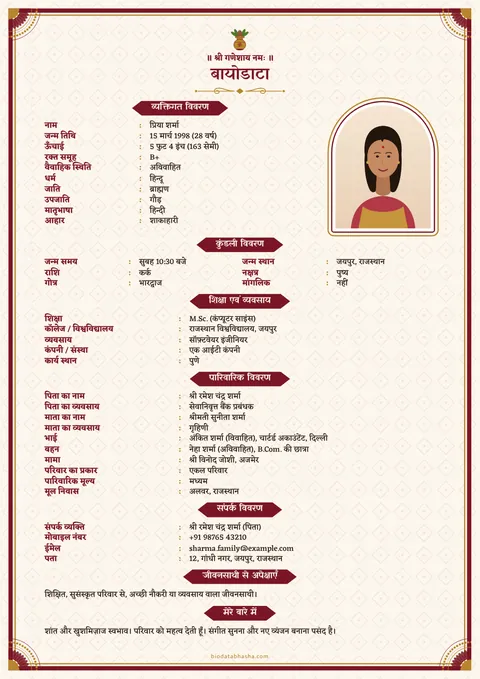
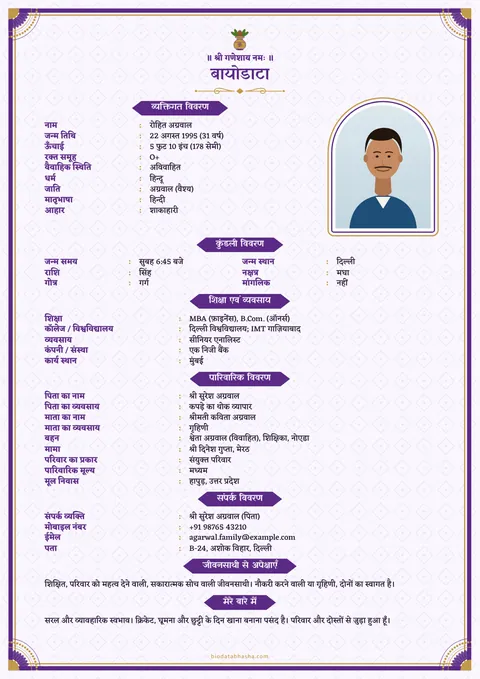
The Royal / Rajasthani group: ornate borders in maroon, saffron and gold. Tap any design below to open it with this sample.
Biodata formats for other communities
By religion: Hindu biodata · Muslim biodata · Sikh biodata · Jain biodata · Christian biodata · Buddhist biodata
By community: Brahmin biodata · Maratha biodata · Agarwal biodata · Kayastha biodata · Jat biodata
Every format works in all 23 languages; caste and community lines are optional and never required.