Sikh marriage biodata format
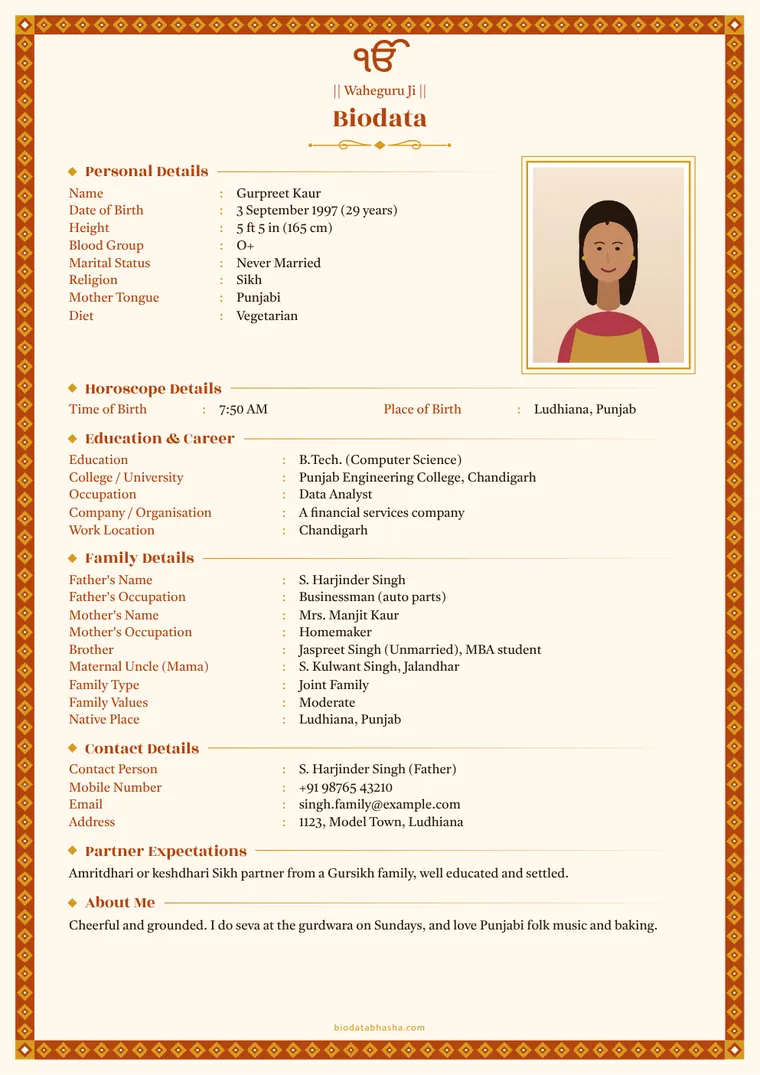
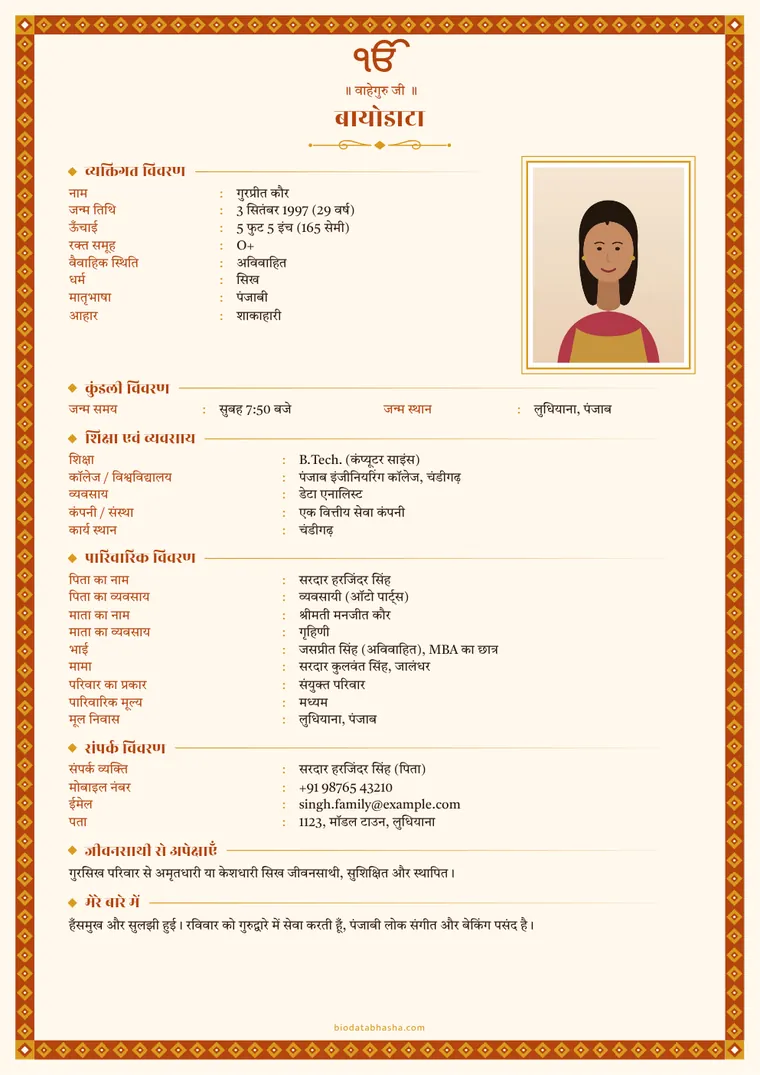
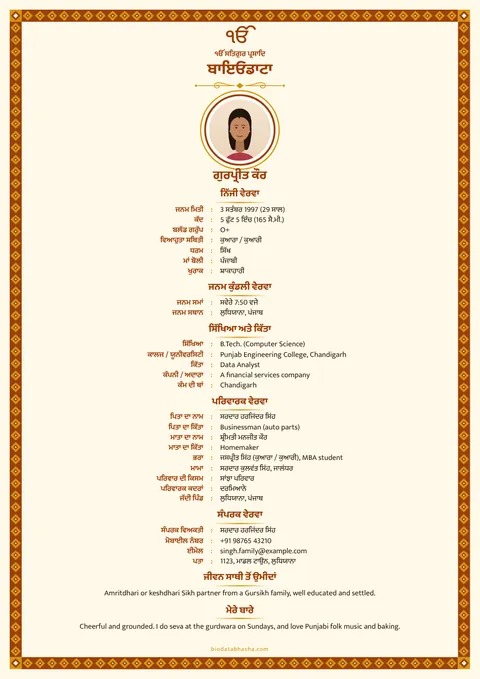
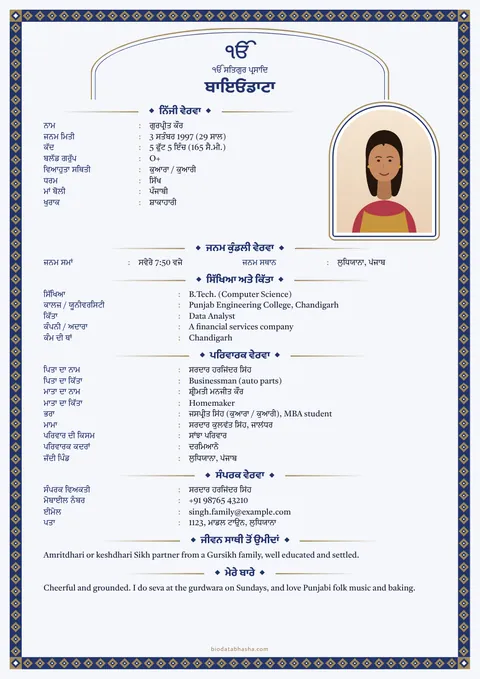
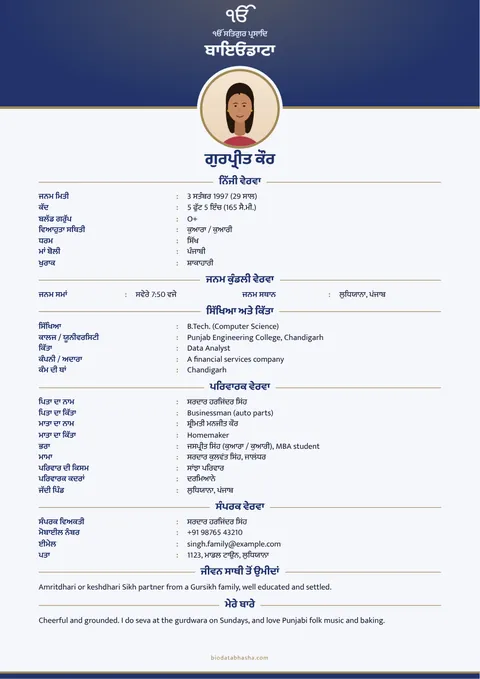
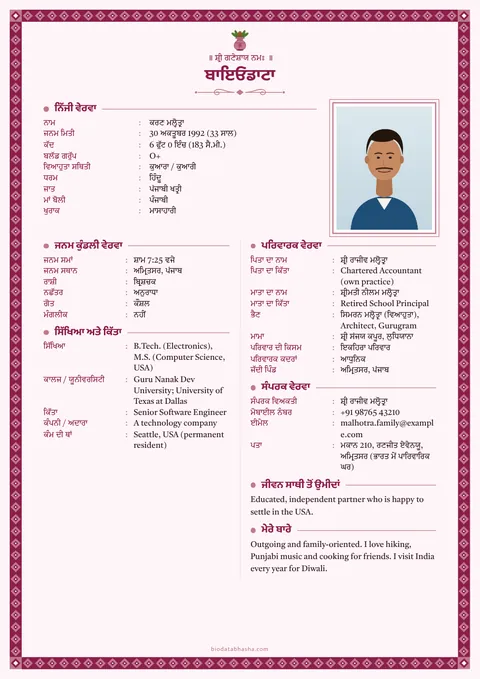
A Sikh biodata usually carries ੴ (Ek Onkar) or “ੴ ਸਤਿਗੁਰ ਪ੍ਰਸਾਦਿ” at the top, and gives education, work, family and the family’s Sikhi traditions. Write it in Gurmukhi for elders and in English for NRI relatives — the same details work for both.
Start with this Sikh sampleReplace the made-up details with yours
What to include in a Sikh biodata
- Top: the ੴ symbol with “ੴ ਸਤਿਗੁਰ ਪ੍ਰਸਾਦਿ” (in Punjabi) or “Waheguru Ji” (in other languages).
- Personal: name, date and place of birth, height, marital status, diet.
- Sikhi: Amritdhari, Keshdhari or Sehajdhari, and got (clan) if your family mentions it — add them with “Add your own field”.
- Education and work, family (S. / Sardar for father, siblings, mama ji) and native place.
- Expectations: for example “from a Gursikh family”.
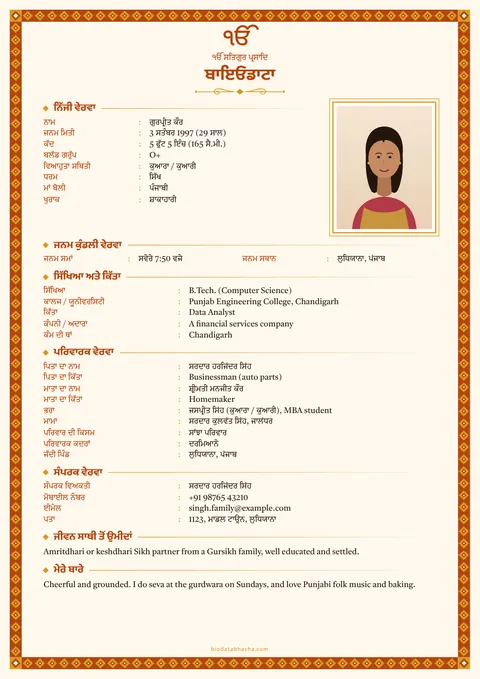
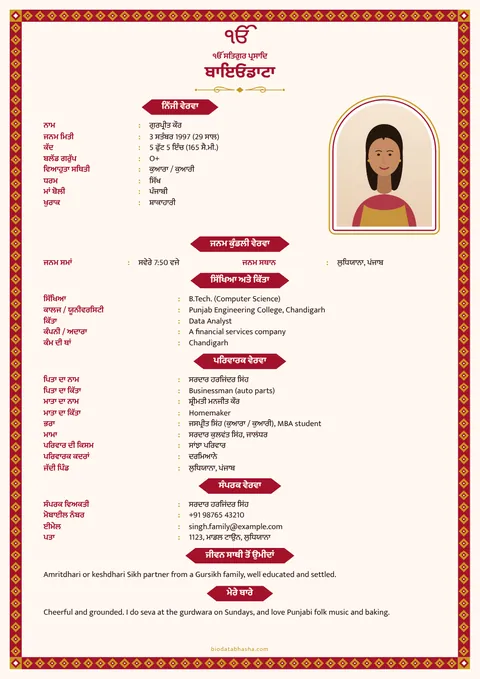
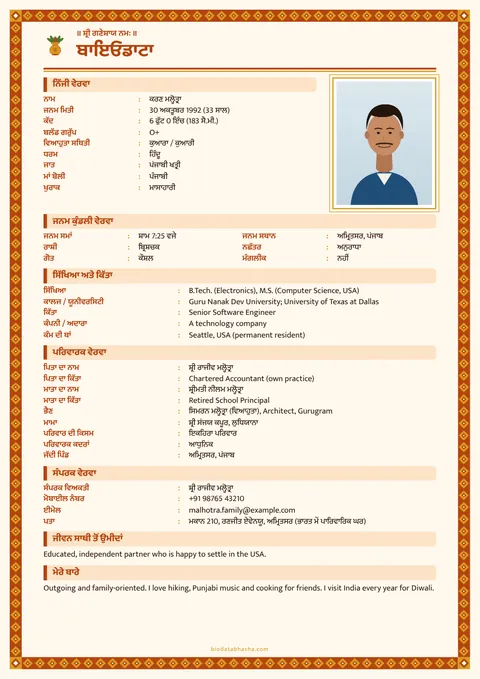
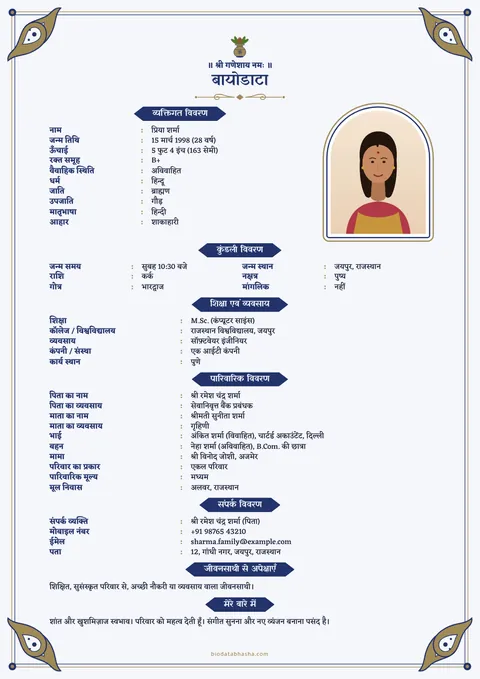
Sikh biodata designs
Sikh biodata: questions
Can I make the biodata in Gurmukhi?
Yes. Choose Punjabi in Design and every heading and label is written in Gurmukhi. Type names in English and the tool suggests Gurmukhi spellings.
Where do I write Amritdhari or Keshdhari?
Use “Add your own field” in the Personal section — for example label “Sikhi” and value “Amritdhari”.
Do Sikh biodatas include kundli?
Most do not. Leave the horoscope fields empty or hide them; that section then disappears from the page.
Biodata formats for other communities
By religion: Hindu biodata · Muslim biodata · Jain biodata · Christian biodata · Buddhist biodata
By community: Brahmin biodata · Maratha biodata · Rajput biodata · Agarwal biodata · Kayastha biodata · Jat biodata
Every format works in all 23 languages; caste and community lines are optional and never required.