Muslim marriage biodata (Nikah biodata) format
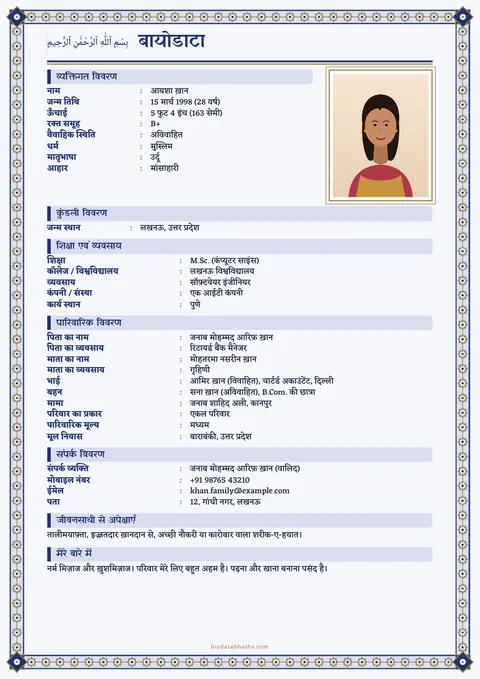
A Muslim marriage biodata (often called a Nikah biodata or rishta biodata) begins with Bismillah or 786, and focuses on education, work, family background and values. Horoscope details are usually left out. BiodataBhasha writes it in Urdu (right to left), Hindi, English or any Indian language.
Start with this Muslim sampleReplace the made-up details with yours
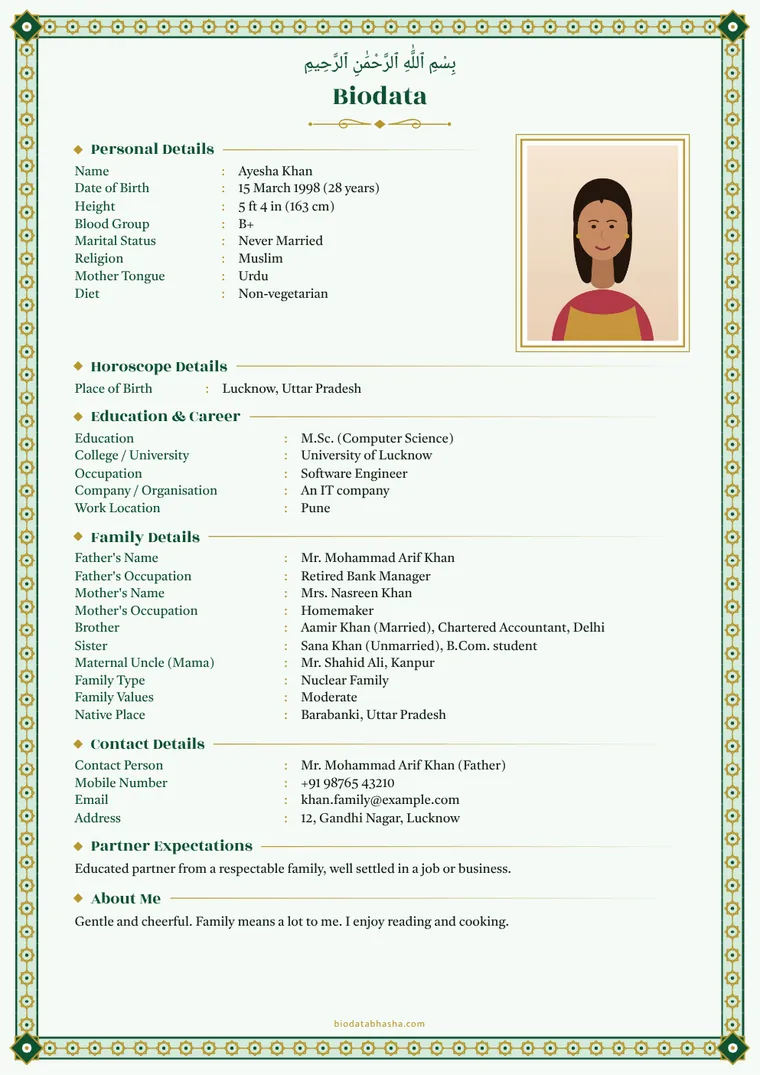
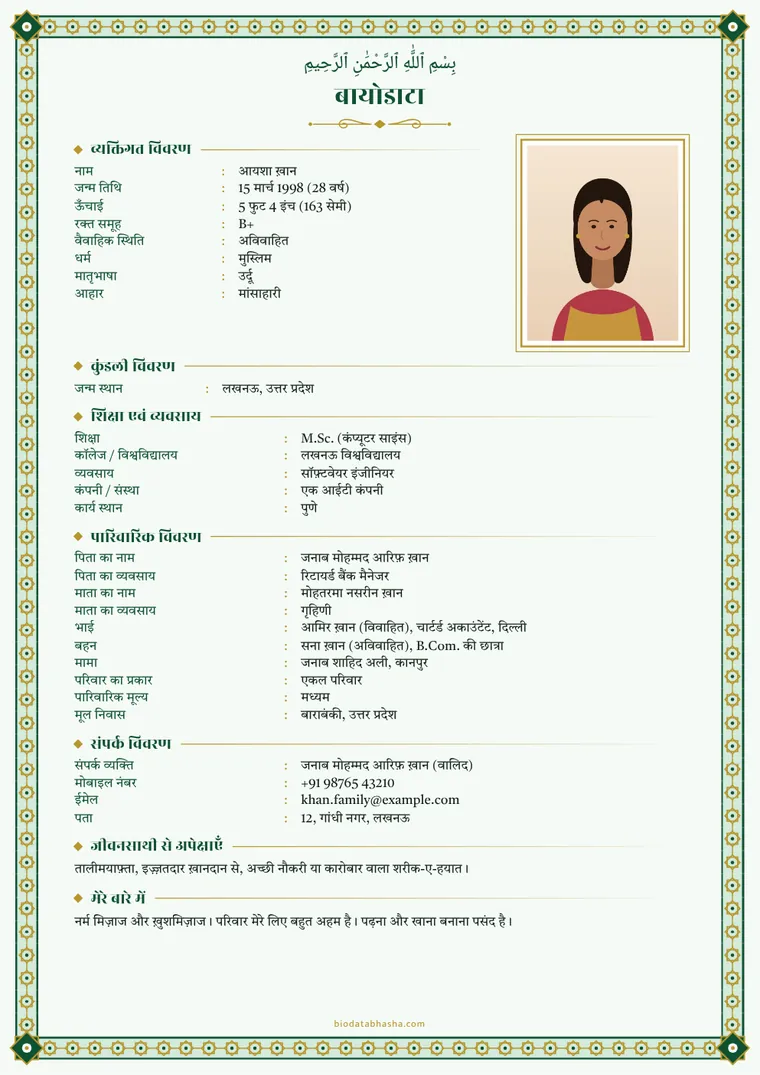
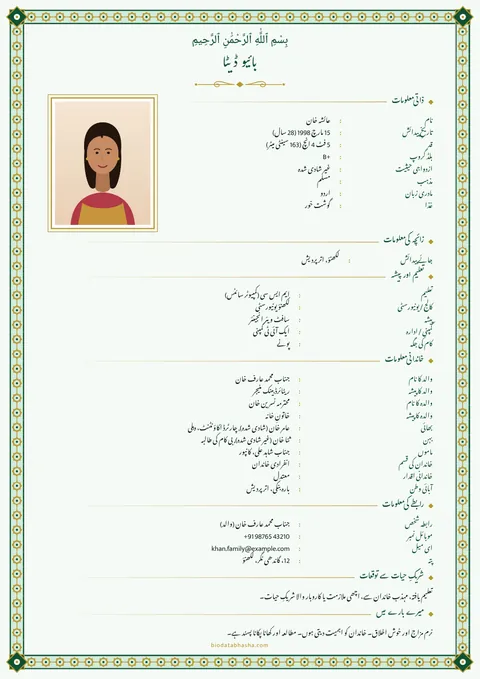
What to include in a Muslim biodata
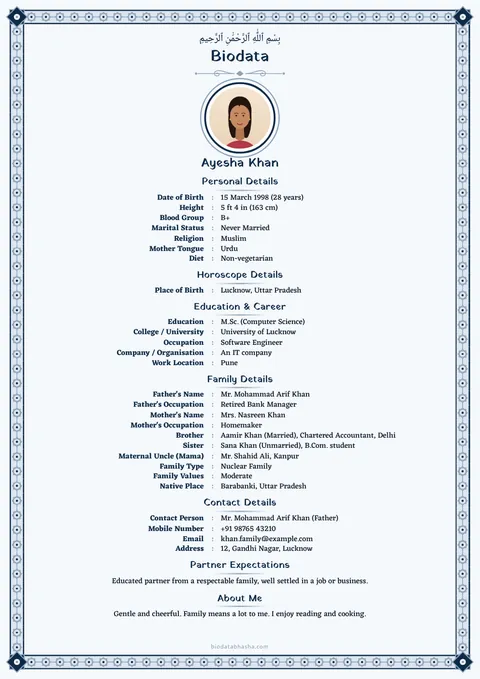
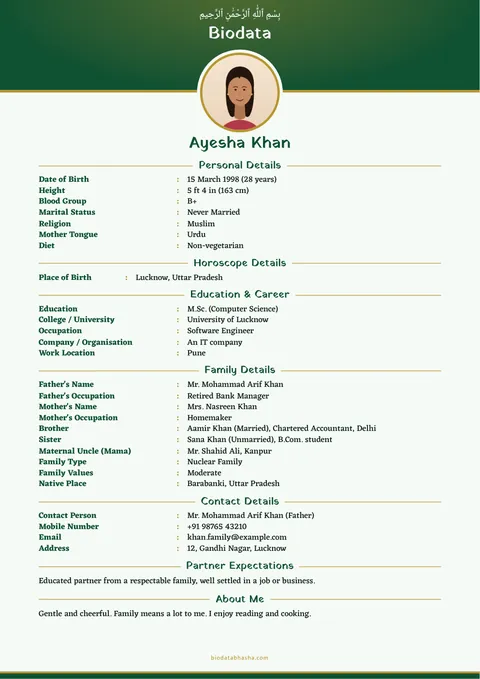
- Top: “بِسْمِ ٱللَّٰهِ ٱلرَّحْمَٰنِ ٱلرَّحِيمِ” or 786.
- Personal: name, date of birth, height, marital status, mother tongue, diet.
- Optional additions: maslak or firqa, biradari, and whether the family prefers a particular city — add any of these with “Add your own field”.
- Education and work, then family: father’s and mother’s names (Janab / Mohtarma), their work, brothers and sisters, and native place.
- Expectations: for example “educated, deendar partner from a respectable family”.
- Kundli fields can stay empty — empty fields never print.
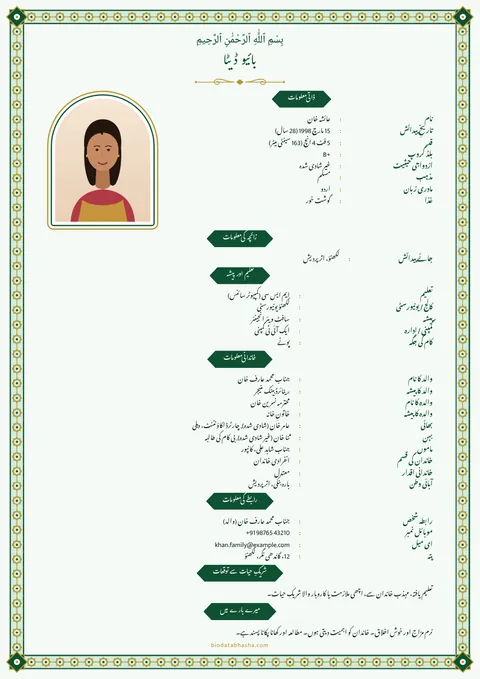
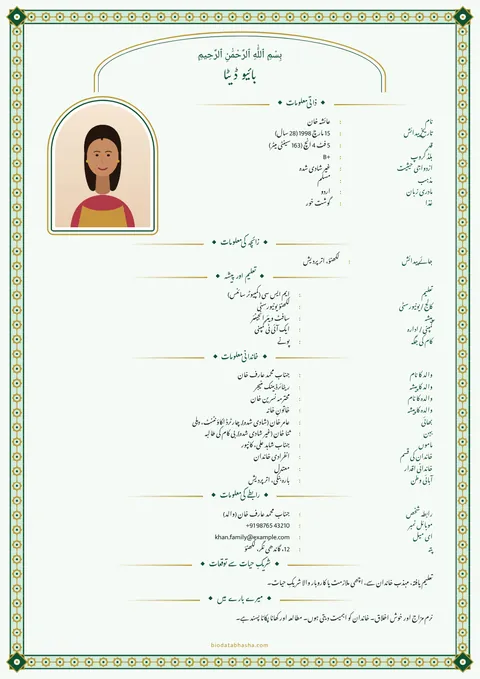
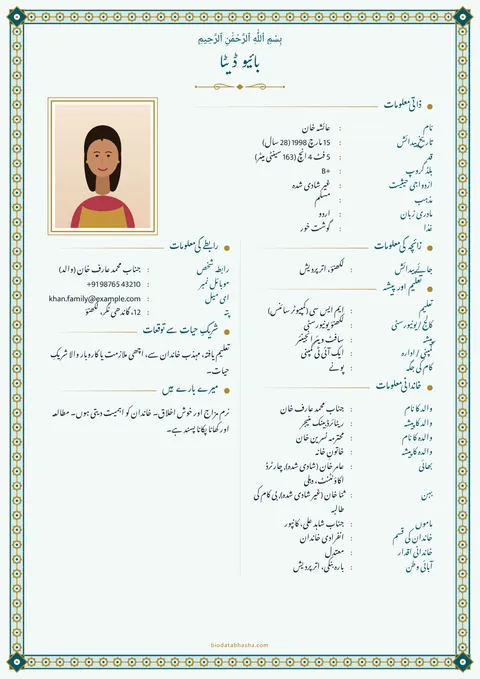
Muslim biodata designs
Muslim biodata: questions
Can I make the biodata in Urdu?
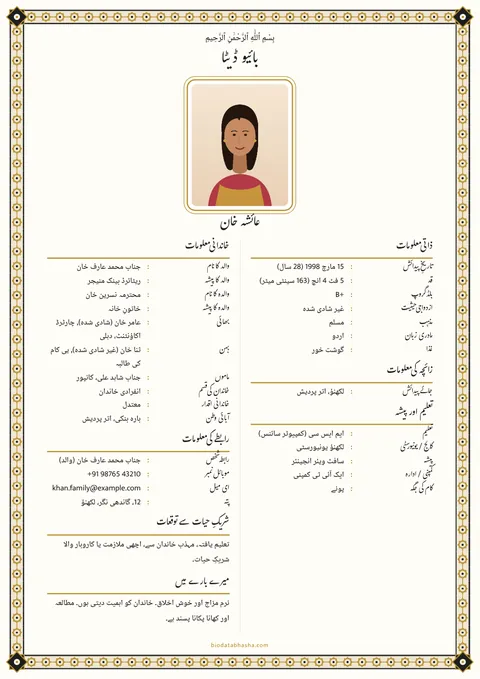
Yes. Choose Urdu in Design: the whole page turns right to left in Nastaliq letters, while English words, emails and phone numbers stay readable. Kashmiri and Sindhi are also available.
What do I write at the top of a Nikah biodata?
Choose the Bismillah symbol to print “Bismillah ir-Rahman ir-Rahim” in Arabic, or 786. You can also leave the top empty.
How do I add maslak, firqa or biradari?
In the form, under Personal details, tap “Add your own field”, write the label (for example “Maslak”) and the value. It prints like every other line.
Does it ask for horoscope details?
Only if you fill them. Leave the horoscope fields empty or hide them with the eye button, and that section does not appear.
Biodata formats for other communities
By religion: Hindu biodata · Sikh biodata · Jain biodata · Christian biodata · Buddhist biodata
By community: Brahmin biodata · Maratha biodata · Rajput biodata · Agarwal biodata · Kayastha biodata · Jat biodata
Every format works in all 23 languages; caste and community lines are optional and never required.