Jat marriage biodata format
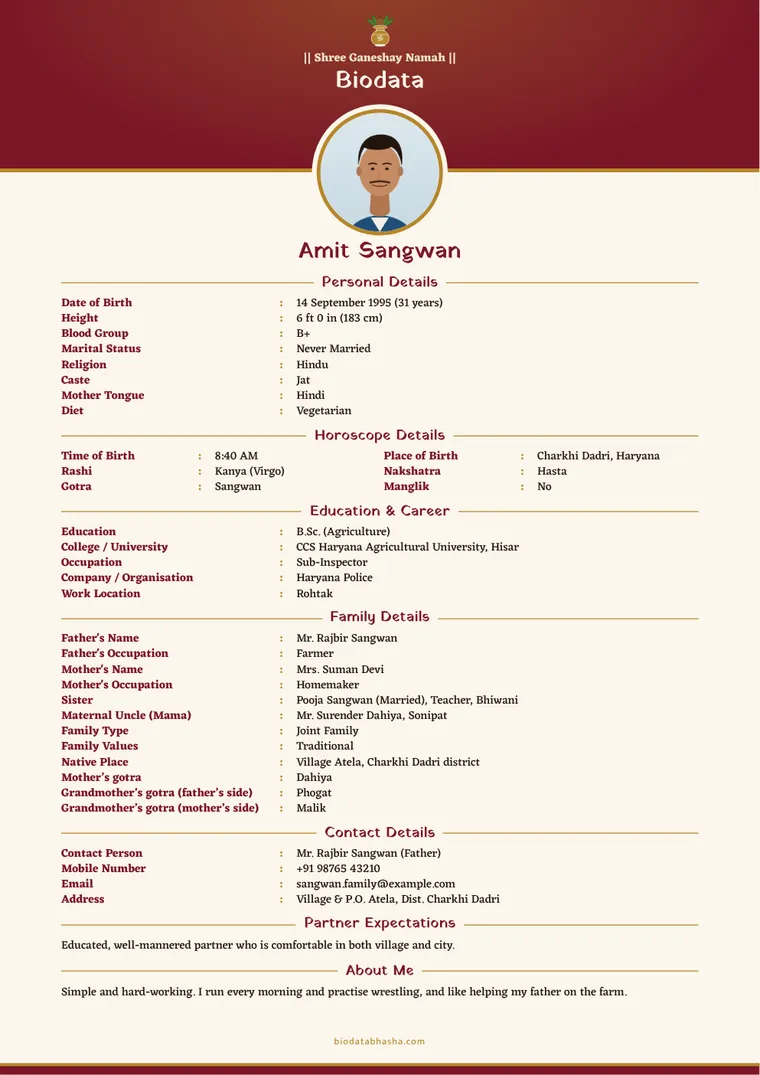
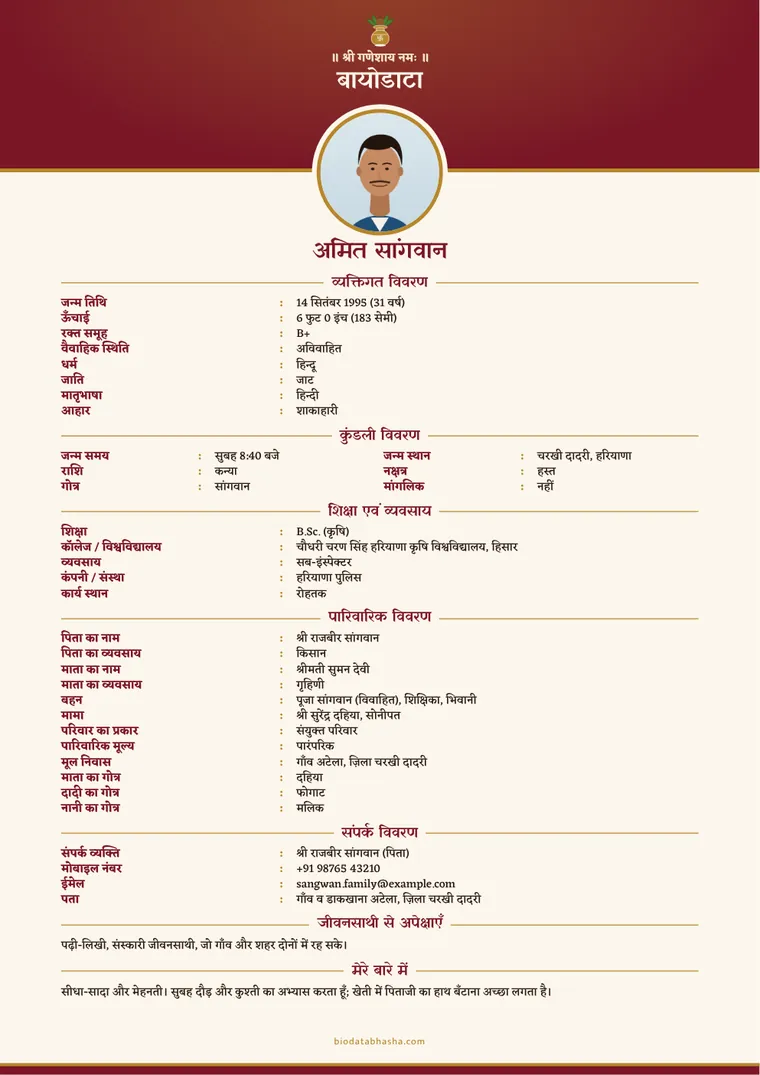
In many Jat families of Haryana, Punjab, western Uttar Pradesh and Rajasthan, a match is not made within one’s own gotra, the mother’s gotra or the grandmothers’ gotras, and often not within the same village. So a Jat biodata lists several gotras and the village clearly. The sample below uses made-up details.
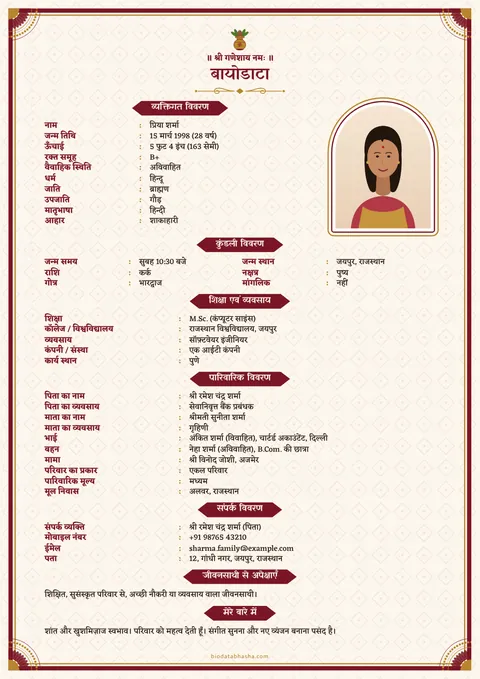
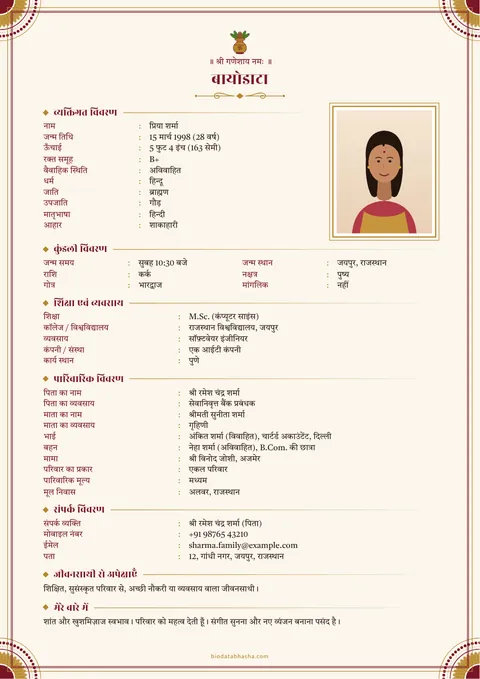
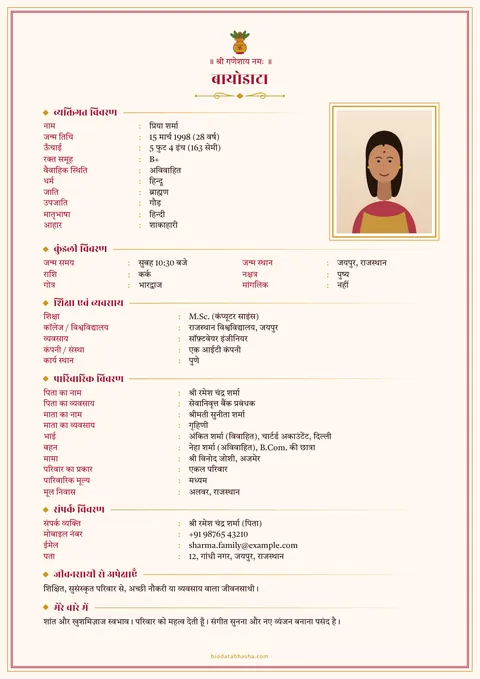
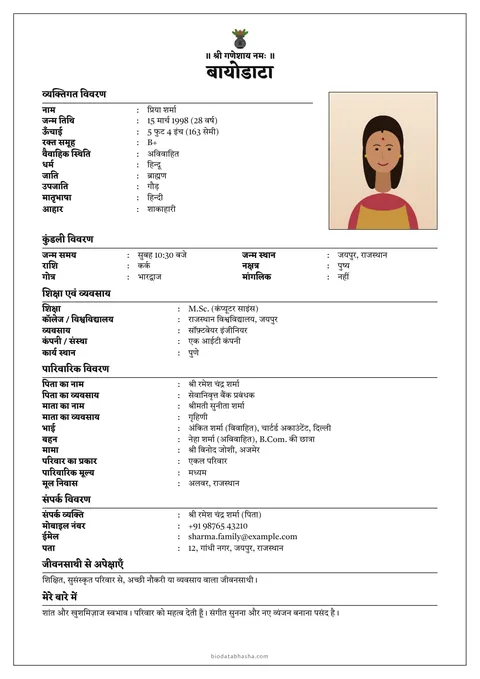
Start with this Jat sampleReplace the made-up details with yours
What to include in a Jat biodata
- Own gotra (for example Sangwan, Malik, Dahiya, Phogat) in the gotra line.
- Mother’s, dadi’s and nani’s gotra — add each with “Add your own field” in the Family section, as in the sample.
- Village and district under native place, because many families avoid a match within the same or a neighbouring village.
- Farming and land if you want to mention them, along with the job or business.
- About me: sports such as wrestling, kabaddi or athletics fit nicely here.
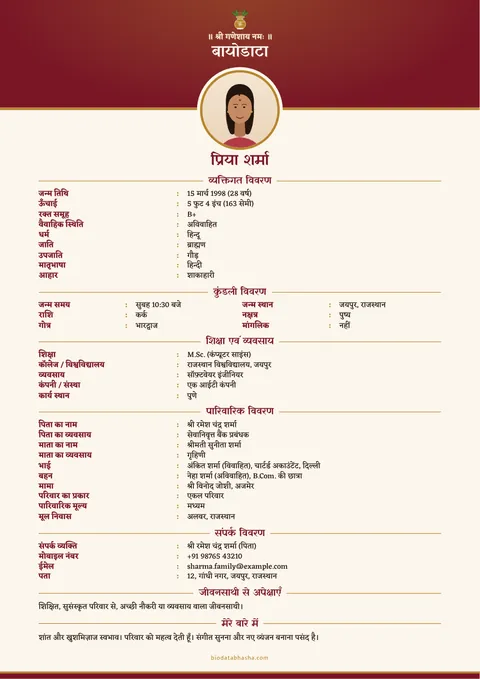
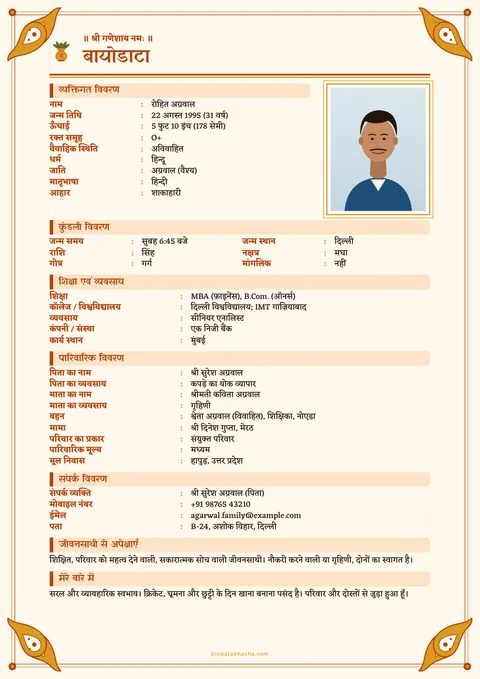
Jat biodata designs
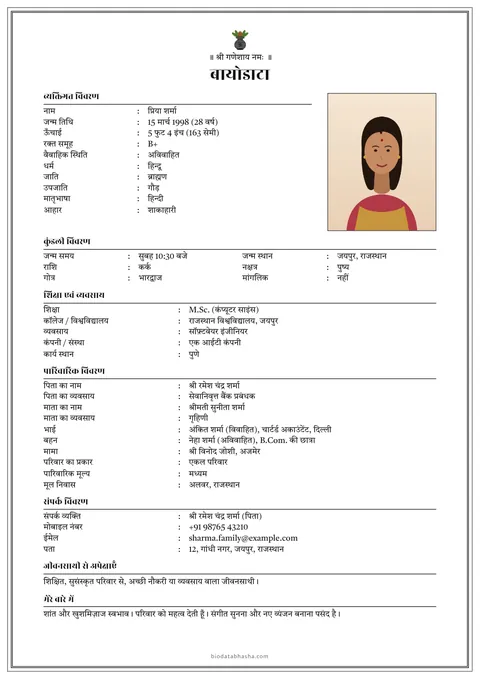
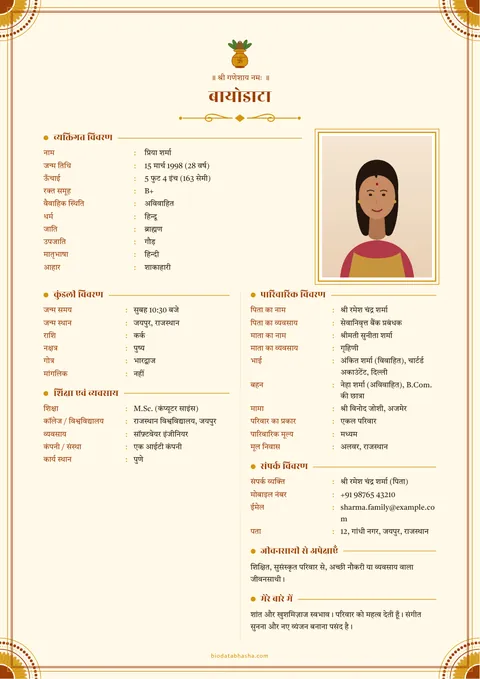
Jat biodata: questions
Which gotras should a Jat biodata show?
Usually four: your own, your mother’s, your father’s mother’s (dadi) and your mother’s mother’s (nani). Families compare these before taking a rishta forward. Write the ones your family follows.
How do I add the extra gotra lines?
In the Family section tap “Add your own field” and write, for example, “माता का गोत्र” with the value “दहिया”. Repeat for dadi and nani.
Can I make it in Hindi and English?
Yes. Make it once, then switch the language in Design and download both versions.
Biodata formats for other communities
By religion: Hindu biodata · Muslim biodata · Sikh biodata · Jain biodata · Christian biodata · Buddhist biodata
By community: Brahmin biodata · Maratha biodata · Rajput biodata · Agarwal biodata · Kayastha biodata
Every format works in all 23 languages; caste and community lines are optional and never required.